The Student Pilot Certificate: When You Need It, How to Apply, and What Else Has to Happen Before You Solo
The short answer
Plenty of students reach solo-ready skill and then sit on the ground for three weeks waiting for a card. That’s the most common avoidable delay in primary training, and it’s purely paperwork. Apply early and it never touches your schedule.
The short version
| Question | Answer | Source |
|---|---|---|
| Needed for lessons? | No | FAA |
| Needed for solo? | Yes | FAA |
| Minimum age | 16; 14 for glider or balloon | FAA, 14 CFR 61.83 |
| Language | Read, speak and understand English | FAA |
| How to apply | IACRA, or paper Form 8710-1 | FAA |
| Who processes it | FSDO, a designated pilot examiner, an airman certification representative at a Part 141 school, or a CFI | FAA |
| Cost | Free at a FSDO; others may charge a reasonable fee | FAA |
| Time to receive | About 3 weeks by mail | FAA |
| Expires? | No, if issued after April 1, 2016 | FAA |
When to apply (earlier than you think)
The application itself is short, but the FAA says the card takes about three weeks to arrive. Apply in your first few lessons. There’s no downside: the certificate doesn’t expire, and nothing about it limits your training.
The same goes for the medical, covered below. Book both as soon as you’re sure you’ll keep training.
How to apply, step by step
- Create an IACRA account at iacra.faa.gov. Note your FTN (FAA Tracking Number), which you’ll also use for knowledge tests.
- Start a new application for a student pilot certificate and fill in your details. Use your legal name exactly as it appears on your ID.
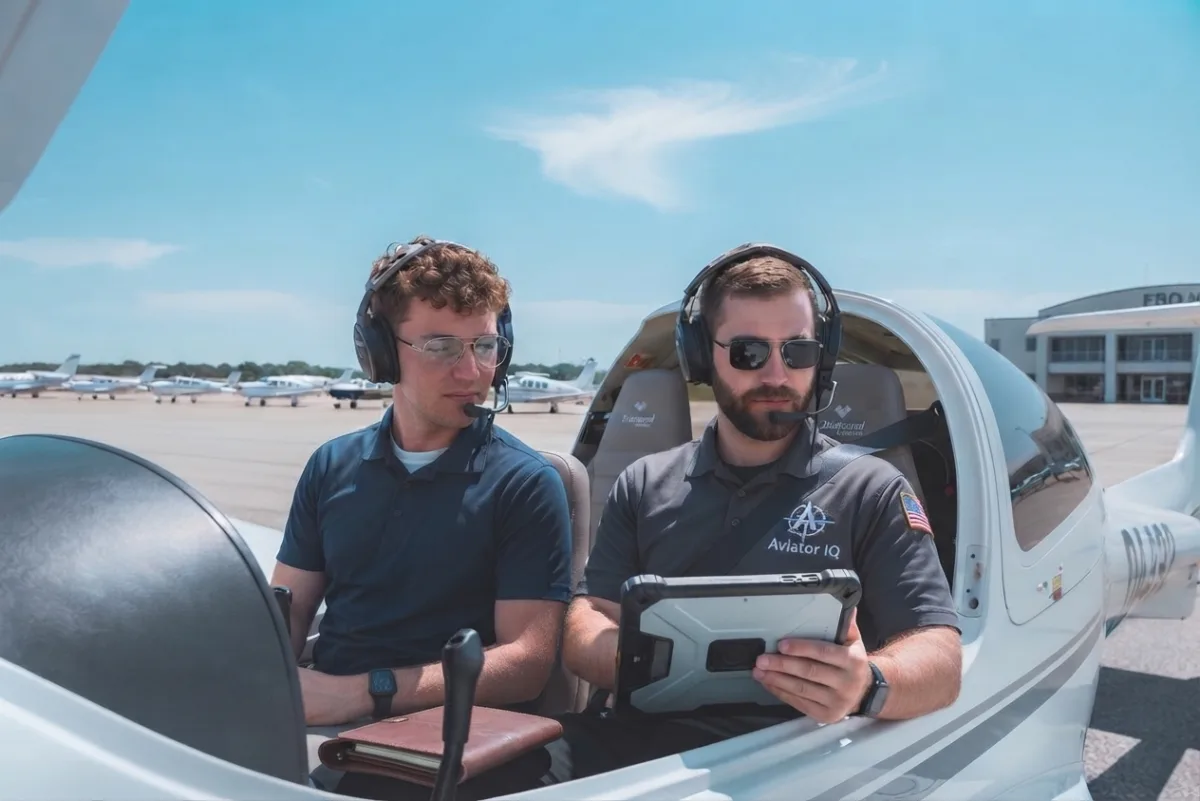
- Meet your recommending person, usually your CFI. They check your identity against a government photo ID and sign off in IACRA.
- Wait for the card. It comes by mail. The FAA says IACRA is the quickest route.
The paper route (Form 8710-1 taken to a FSDO, examiner, Part 141 school representative or CFI) still exists but is slower. If you apply at a FSDO there’s no charge; a CFI, examiner or school representative may charge a reasonable processing fee. Many instructors don’t.
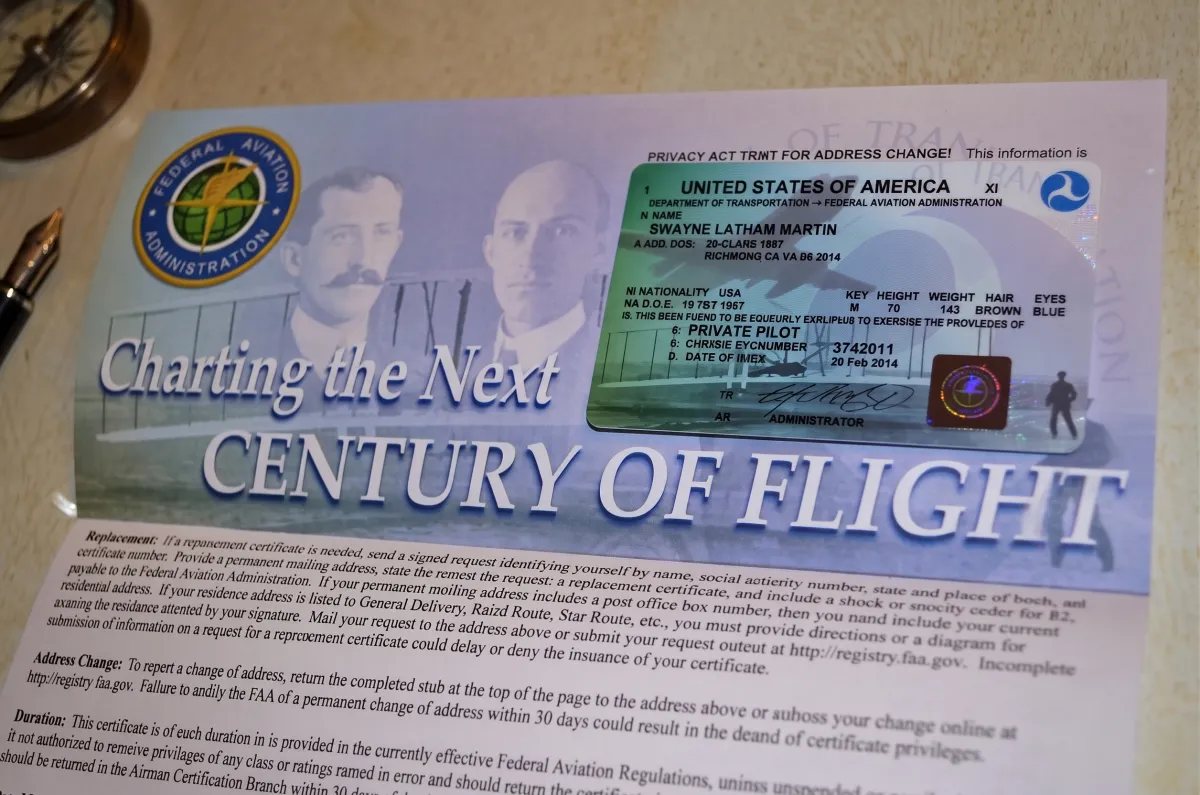
Your solo endorsements no longer go on the certificate itself. They go in your logbook, so the plastic card stays clean.
The medical: the part that actually stops people
The student certificate is easy. The medical is where training actually stalls, so start it early.
| What you’re training for | Medical needed to solo | Rule |
|---|---|---|
| Private pilot, airplane | At least a third-class medical certificate | 14 CFR 61.23(a)(3) |
| Sport pilot (light-sport aircraft, not glider or balloon) | A third-class medical or a U.S. driver’s license | 61.23(c)(1)(i) and (ii) |
| Glider or balloon | None | 61.23(b)(1) |
A third-class medical issued when you’re under 40 is valid until the end of the 60th month after the exam; at 40 or older, the 24th month.
What about BasicMed? BasicMed lets some pilots fly on a driver’s license instead of a current medical certificate, and student pilots can use it in principle. The catch: 61.23(c)(3)(i)(B) requires that you have held an FAA medical certificate at some point after July 14, 2006. Almost no new student has, so in practice a new airplane student needs a third-class medical first.
Our advice: if you take any regular medication or have a condition you’re unsure about, book the medical before you spend serious money on lessons. A deferral can take months to resolve, and you want to know before your 20th hour, not after it.
If a medical is a real obstacle, sport pilot is the main alternative, since it accepts a U.S. driver’s license.
Before your first solo: the endorsements
The certificate is only one of several things that have to be in place. Under 14 CFR 61.87, your instructor must:
- Give you a pre-solo knowledge test covering the relevant parts of Parts 61 and 91, the airspace and procedures at your airport, and the flight characteristics and limitations of the aircraft. Your instructor administers it and reviews every wrong answer with you before signing you off.
- Train you in the pre-solo maneuvers listed in 61.87 and judge you proficient.
- Endorse your logbook for solo in the specific make and model, within the 90 days before the flight. The endorsement stays valid for solo only if an instructor renews it every 90 days.
More endorsements come later. Night solo needs night training at your airport and its own make-and-model endorsement within the past 90 days. Solo cross-country is a separate endorsement; the solo endorsement alone doesn’t cover it. And each make and model you solo needs its own endorsement.
The rule text is in 14 CFR Part 61, and the maneuvers themselves are explained in the Airplane Flying Handbook.
A worked timeline
Alex, 24, starts lessons on March 2.
- Week 1: applies for the student certificate in IACRA with her CFI. Books a third-class medical with an aviation medical examiner.
- Week 3: the plastic card arrives. Medical done; valid through March of the year five years out.
- Weeks 4 to 9: pre-solo training. She takes the pre-solo knowledge test in week 8 and reviews the two questions she missed.
- Week 10: endorsement in the logbook, first solo.
If she’d waited until week 9 to apply, she would have lost three weeks of solo time and paid for dual lessons she didn’t need.
Mistakes we see
- Applying when the instructor says “you’re nearly ready.” That’s three weeks too late.
- Assuming BasicMed works for a first solo. Not unless you held an FAA medical after July 14, 2006.
- Using a nickname in IACRA. Your name has to match your ID and will follow you to every future certificate.
- Assuming the solo endorsement covers everything. Night solo, cross-country and each new aircraft type need their own.
- Letting the 90-day endorsement lapse during a break from training. You’ll need a fresh sign-off.
What to do next
- Create your IACRA account and get your FTN.
- Ask your instructor to process the application at your next lesson.
- Book the medical with an AME.
- Start ground study alongside flying. See choosing a ground school, and start the private pilot practice test early. When you’re ready, here’s booking the private pilot written.
If your instructor relationship isn’t working, read switching flight instructors before you lose momentum. And for the bigger picture, see where the student certificate fits among FAA certificates.
Frequently asked questions
Do I need a student pilot certificate to take flying lessons?
No. The FAA says you need one before you fly solo, not to take lessons with an instructor.
How old do you have to be for a student pilot certificate?
16, or 14 if you will fly a glider or balloon.
How long does it take to get a student pilot certificate?
About three weeks by mail, according to the FAA. Applying through IACRA is the fastest way.
Does a student pilot certificate expire?
Not if it was issued after April 1, 2016. It is surrendered when you earn a higher certificate. Older certificates expire on their printed date.
Can a student pilot use BasicMed?
Only if they have held an FAA medical certificate at some point after July 14, 2006, and meet BasicMed’s other conditions. Most new students need a third-class medical to solo an airplane.
How we checked this
We read the FAA’s student pilot guidance and the current 14 CFR Part 61 text on November 16, 2026.
- FAA, Become a pilot (student pilot certificate FAQ): faa.gov/pilots/become/student_cert
- 14 CFR 61.23, medical certificates: eCFR 61.23
- 14 CFR 61.83, eligibility for student pilots: eCFR 61.83
- 14 CFR 61.87, solo requirements for student pilots: eCFR 61.87