Surviving the CFI & CFII Written Exams: How to Beat FAA Trick Questions
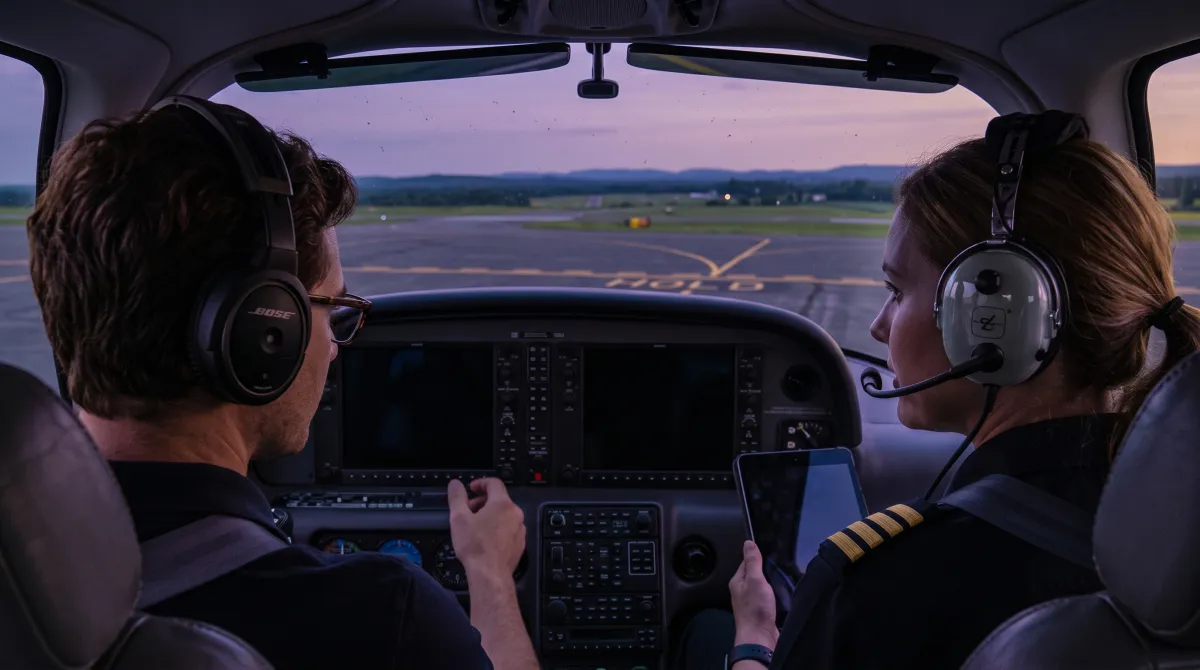
The instructor tests where two answers look right
The Flight Instructor Airplane and Flight Instructor Instrument writtens raise the difficulty in one specific way: the wrong answers get good. At student level a distractor is obviously off. At instructor level, two choices can both look correct, and only one is exactly right.
You beat that by knowing the mechanism, not the wording. A few topics generate most of the near-miss questions, because on each one a shallow answer feels safe enough: the turning tendencies, spin mechanics, the instrument scan, and the endorsement rules. Go one level deeper on those and the ambiguity disappears.
The four left-turning tendencies, one by one
A single-engine airplane wants to roll and yaw left from four separate causes. The test rarely asks you to list them. It asks which one dominates in a given moment, so learn each mechanism with the phase and keyword that point to it.
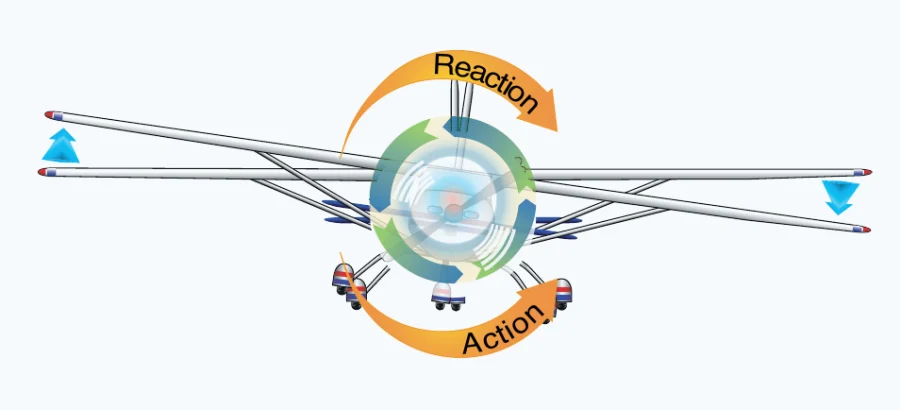
The engine turns the prop clockwise, so Newton's third law rolls the airframe left.
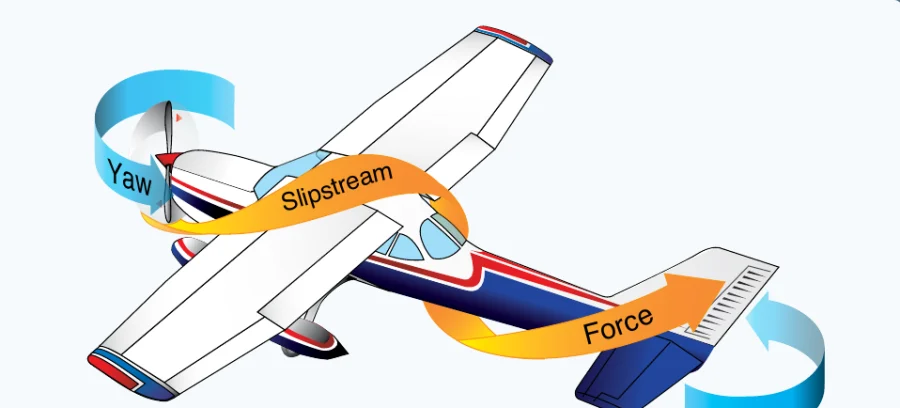
The corkscrewing propwash strikes the left side of the vertical fin, yawing the nose left.
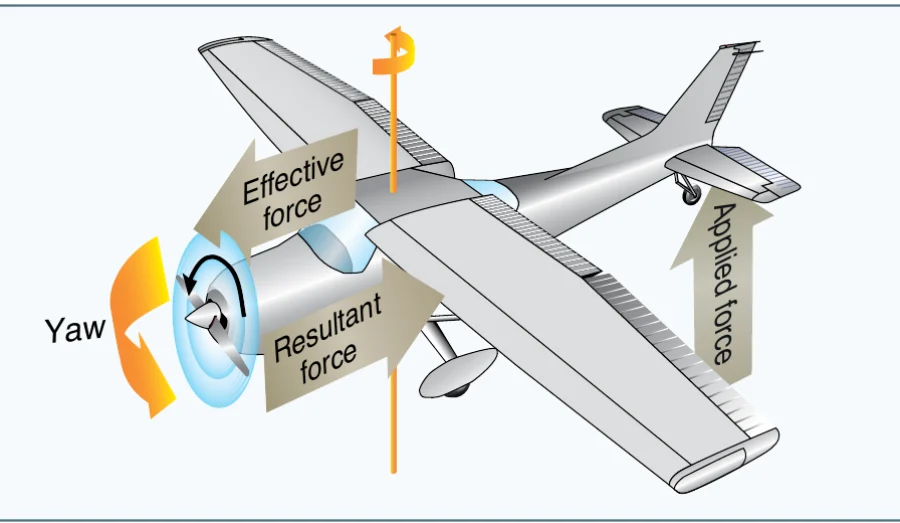
Raising the tail applies a force felt 90 degrees later in rotation, yawing the nose left.
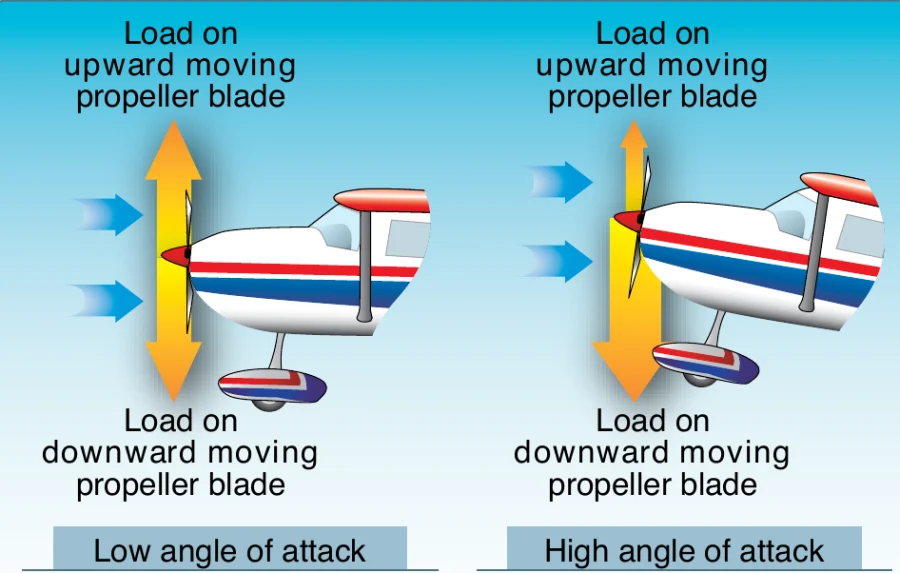
At a high angle of attack the descending right blade takes a bigger bite, moving thrust right and yawing the nose left.
Spins, and why the recovery order matters
A spin is a stall that has started to autorotate: one wing is more stalled than the other, so the airplane rolls, yaws, and corkscrews down. Recovery undoes that in a fixed order, and the order is the point. Break the stall before you stop the rotation and you can make it worse. The memory word is PARE.
- 1Power to idle
Reducing power removes the slipstream and pitching effects that feed the rotation.
TrapLeaving power in keeps the spin energized and can flatten it.
- 2Ailerons neutral
Center the ailerons before doing anything else with roll.
TrapDeflecting ailerons changes camber and raises the effective angle of attack on the already-stalled downgoing wing, driving the aircraft into an unrecoverable flat or accelerated spin.
- 3Rudder full opposite
Apply full rudder against the direction of rotation to stop the yaw.
TrapPartial or same-direction rudder sustains the autorotation.
- 4Elevator briskly forward
Move the elevator forward to break the stall, then recover from the dive that follows.
TrapPulling back keeps the wing stalled; recover from the dive only after rotation stops.
The instrument scan trap on the CFII
The instrument instructor test leans on the primary and supporting method. In steady straight-and- level flight, the primary instrument for a control is the one that shows the least change when you are holding the target exactly.
| Control | Primary | Supporting |
|---|---|---|
| Pitch | Altimeter | Attitude indicator, vertical speed |
| Bank | Heading indicator | Attitude indicator, turn coordinator |
| Power | Airspeed indicator | Manifold pressure or tachometer |
The trap sets the scene during the entry to a constant-airspeed climb or a standard-rate turn, where the primary instrument is different from the straight-and-level case. This matrix lays the three side by side:
| Control | Straight & level | Standard-rate turn (entry) | Constant-airspeed climb (entry) |
|---|---|---|---|
| Pitch | Altimeter | Altimeter | Attitude indicator |
| Bank | Heading indicator | Attitude indicator | Heading indicator |
| Power | Airspeed indicator | Airspeed indicator | Tachometer / manifold pressure |
The regulatory traps only a CFI has to catch
Instructor tests probe the endorsements and currency rules you now have to know to the letter. The near-miss answers name the right regulation with the wrong interval, or the right endorsement for the wrong person. These come up repeatedly on the FIA:
| Regulation | What it covers | The trap |
|---|---|---|
| § 61.87(n) vs § 61.93 | The 90-day make-and-model solo endorsement versus the separate solo cross-country requirements | Answers swap the 90-day solo endorsement for the cross-country one, or the reverse |
| § 61.49 | Retesting after a failed knowledge or practical test | You need additional training and a new logbook endorsement before retesting, not just a new appointment |
| § 61.39 | Prerequisites for a practical test | The knowledge test must be within the preceding 24 calendar months, plus an instructor endorsement and training within the 2 calendar months preceding the test |
| § 61.109 / § 61.129 | Test-prep flight time (private / commercial) | 3 hours of flight training in preparation for the practical test, within the preceding 2 calendar months (not 60 days) |
How to study for the near-miss answer
When two answers look right, the tie always breaks on the mechanism or the exact number, so study to that depth. For every miss, say why the almost-right answer is wrong, not just why the correct one is correct. The Flight Instructor Practice Test pairs each answer with its FAA source and explains the near-miss distractor, which is the exact skill the instructor tests reward.